

Everyone chasing that perfect vintage tee knows the search is about more than just finding an old shirt. For fashion-forward Millennials who crave nostalgia and authenticity, vintage tees are living pieces of cultural history that challenge modern fast fashion with true character and story. Discover what really sets these shirts apart, why myths about age and value persist, and how understanding authentic vintage leads to bold style and meaningful conversation.
Table of Contents
- Defining Vintage Tees And Common Myths
- Types Of Vintage Tees And Their Nostalgic Appeal
- Unique Qualities: Fabric, Fit, And Storytelling
- Sustainability And Ethical Sourcing Impact
- How Vintage Tees Spark Connection And Conversation
- Comparing Vintage Tees To Modern Alternatives
Key Takeaways
| Point | Details |
|---|---|
| Vintage Tees as Cultural Narratives | Vintage tees capture rich cultural histories and personal stories, making them more than just clothing. They serve as storytelling canvases reflecting past eras and movements. |
| Importance of Authenticity | Genuine vintage pieces must possess specific markers of authenticity, including original manufacturing details and fabric composition. Not all old shirts qualify as vintage. |
| Sustainability Through Vintage Fashion | Choosing vintage tees supports sustainable fashion practices, reducing textile waste and rejecting exploitative manufacturing. Each piece contributes to a more responsible consumption model. |
| Social Connection and Conversation | Wearing vintage tees sparks meaningful interactions and connections, serving as conversation starters by invoking shared cultural interests and experiences. |
Defining Vintage Tees and Common Myths
Vintage tees represent far more than just clothing - they are wearable time capsules that capture cultural moments and personal histories. Unlike mass-produced contemporary shirts, vintage fashion transcends simple garment definitions, embodying complex narratives of style, heritage, and individual expression.
Traditionally, vintage clothing refers to authentic garments originating from previous eras, typically spanning from the 1920s to the 1980s. However, contemporary interpretations have expanded this definition to include pieces as recent as the 1990s. The terminology surrounding vintage fashion remains nuanced, with terms like ‘antique’, ‘retro’, and ‘secondhand’ often used interchangeably but carrying distinct technical meanings.
Common myths about vintage tees persist in the fashion world. Many people mistakenly believe that any old shirt qualifies as vintage, when in reality, true vintage pieces require specific authenticity markers. Authentic vintage tees are not merely old - they represent unique design aesthetics, manufacturing techniques, and cultural snapshots that cannot be easily replicated. The distinguishing factors include original manufacturing dates, fabric composition, graphic design integrity, and preservation quality.
Pro tip: When hunting for genuine vintage tees, always examine the fabric tag, check for original manufacturing details, and verify the shirt’s age through specialized vintage clothing resources.
Types of Vintage Tees and Their Nostalgic Appeal
Vintage tees are more than just garments - they are storytelling canvases that capture the essence of cultural moments and personal memories. Vintage t-shirt market segments reveal a rich tapestry of styles that resonate deeply with collectors and fashion enthusiasts alike. From iconic band merchandise to cult movie memorabilia, each type of vintage tee represents a unique slice of cultural history.
The landscape of vintage tees encompasses several distinctive categories that speak to different nostalgic impulses. Band tees from legendary musical acts serve as wearable concert memories, capturing the raw energy of specific performances or entire music eras. Movie and television graphic tees allow fans to showcase their connection to beloved pop culture moments, transforming personal fandom into a fashion statement. Sports tees featuring vintage team logos and designs offer a powerful connection to athletic history and memorable sporting achievements.
Corporate logo tees and unexpected bootleg designs add another layer of complexity to the vintage t-shirt universe. These pieces often represent more than just clothing - they are cultural artifacts that reflect specific moments in design, marketing, and societal trends. Rare and unique vintage tees become conversation starters, with collectors valuing not just the aesthetic appeal but the historical significance and emotional resonance of each piece.
This table highlights popular vintage tee types and their nostalgic significance:
| Type | Example | Nostalgic Appeal |
|---|---|---|
| Band T-Shirts | Rolling Stones | Evoke music era and original concerts |
| Movie/TV Graphic Tees | Star Wars | Celebrate pop culture milestones |
| Sports Tees | 1980s NBA Teams | Connect to iconic athletic moments |
| Corporate Logo Tees | Classic Pepsi | Capture branding trends from the past |
| Bootleg/Unique Prints | DIY Art Prints | Showcase underground or rare styles |
Pro tip: When collecting vintage tees, focus on preservation by storing them flat, avoiding direct sunlight, and using acid-free tissue paper to maintain their original condition and nostalgic value.
Unique Qualities: Fabric, Fit, and Storytelling
Vintage tees represent a remarkable intersection of textile artistry and personal narrative, where every thread and wear pattern tells a profound story. Vintage garment characteristics reveal intricate cultural narratives that transform simple clothing into wearable historical documents. The fabric itself becomes a canvas, with unique textures, subtle discolorations, and hand-crafted details that mass-produced contemporary shirts cannot replicate.
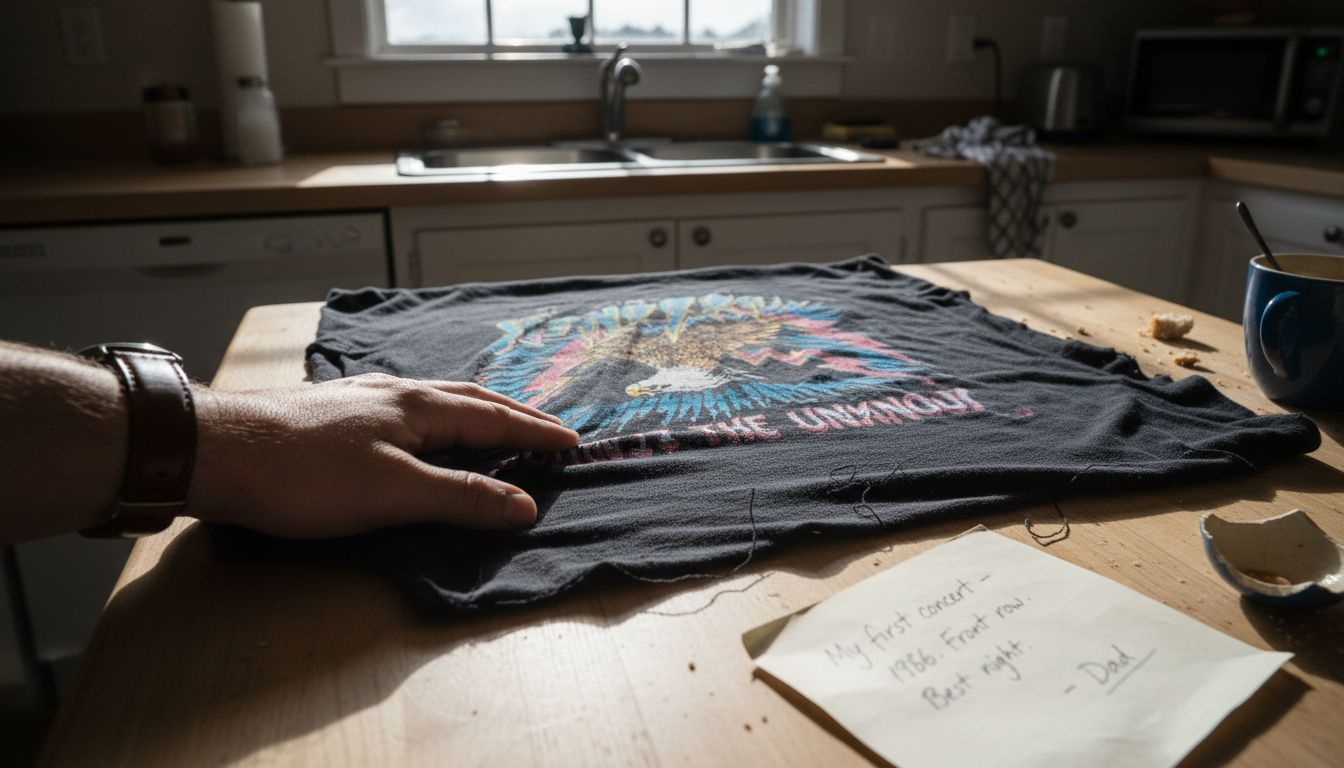
The fit of vintage tees is a testament to evolving fashion sensibilities, with cuts that reflect specific decades and cultural movements. Unlike modern standardized sizing, vintage shirts often feature more distinctive silhouettes that highlight the body’s natural shape and the design aesthetics of their original era. Soft cotton blends, unique weaving techniques, and subtle manufacturing variations make each piece a unique artifact of textile history.
Storytelling through clothing reaches its pinnacle with vintage tees. Each shirt carries invisible narratives - concert memories, political statements, pop culture moments - encoded in its graphic design, fabric wear, and provenance. The patina of age, subtle fading, and original printing techniques transform these garments from mere clothing into personal talismans that connect wearers with broader cultural experiences. Collectors and fashion enthusiasts don’t just wear these shirts; they become custodians of living history.
Pro tip: When evaluating vintage tees, examine the fabric tag, check for original manufacturing marks, and look for unique wear patterns that authenticate the shirt’s age and story.
Sustainability and Ethical Sourcing Impact
Vintage clothing has emerged as a powerful force in the sustainable fashion movement, representing more than just a style choice - it’s a conscious environmental statement. Vintage clothing supports circular economy principles by dramatically reducing textile waste and minimizing the resource-intensive processes of new clothing production. By extending the lifecycle of existing garments, fashion enthusiasts can dramatically reduce their individual carbon footprint and challenge the destructive fast fashion industry.
The ethical implications of choosing vintage tees extend far beyond environmental considerations. Each vintage piece represents a rejection of exploitative manufacturing practices prevalent in contemporary mass-production systems. By selecting pre-existing clothing, consumers actively discourage wasteful manufacturing processes, support local secondhand economies, and promote a more responsible approach to fashion consumption. The cultural value of these garments transcends their material existence, representing a form of passive activism against unsustainable global textile production.
Moreover, vintage clothing embodies a profound commitment to sustainability that goes beyond simple recycling. These garments tell complex stories of craftsmanship, cultural evolution, and human creativity. Each vintage tee represents a form of textile preservation, transforming clothing from a disposable commodity into a cherished artifact with historical and emotional significance. The decision to wear vintage is simultaneously a personal style choice and a broader statement about environmental consciousness and ethical consumption.
Pro tip: When building a sustainable wardrobe, prioritize vintage pieces that are well-constructed, versatile, and align with your personal style to maximize both environmental impact and long-term wearability.
How Vintage Tees Spark Connection and Conversation
Vintage tees are far more than mere clothing - they are powerful social instruments that bridge generational gaps and ignite meaningful interactions. Vintage items create profound emotional connections by serving as dynamic conversation starters that reveal personal histories and shared cultural experiences. When someone wears a vintage band tee from a legendary music era or a graphic shirt referencing a cult movie, they’re essentially inviting dialogue and creating opportunities for spontaneous human connection.
These garments function as visual narratives, communicating complex personal identities without uttering a single word. A vintage Rolling Stones tee might spark a conversation about music history, while a retro movie poster shirt could trigger a passionate discussion about classic cinema. Each shirt becomes a storytelling medium, transforming fashion into an interactive social experience that transcends traditional clothing’s passive role. By wearing vintage, individuals signal their appreciation for cultural depth, creativity, and historical context.
Moreover, vintage tees operate as cultural bridges, connecting strangers through shared nostalgic references and mutual appreciation. They challenge the anonymity of modern fashion by encouraging genuine human interaction. Whether it’s a fellow concert enthusiast recognizing a rare band tee or someone reminiscing about a shared cultural moment, these shirts create unexpected moments of connection. They transform clothing from a personal statement into a communal experience, inviting strangers to share stories, memories, and emotional resonances that might otherwise remain unspoken.
Pro tip: Choose vintage tees with graphics or references that genuinely resonate with your personal interests, as authentic passion is the most compelling conversation starter.
Comparing Vintage Tees to Modern Alternatives
The world of t-shirts presents a fascinating dichotomy between vintage pieces and contemporary designs, each offering distinct advantages and unique characteristics. Vintage band tees demonstrate superior long-term value compared to mass-produced modern alternatives, representing more than just clothing but authentic cultural artifacts with deep historical significance.
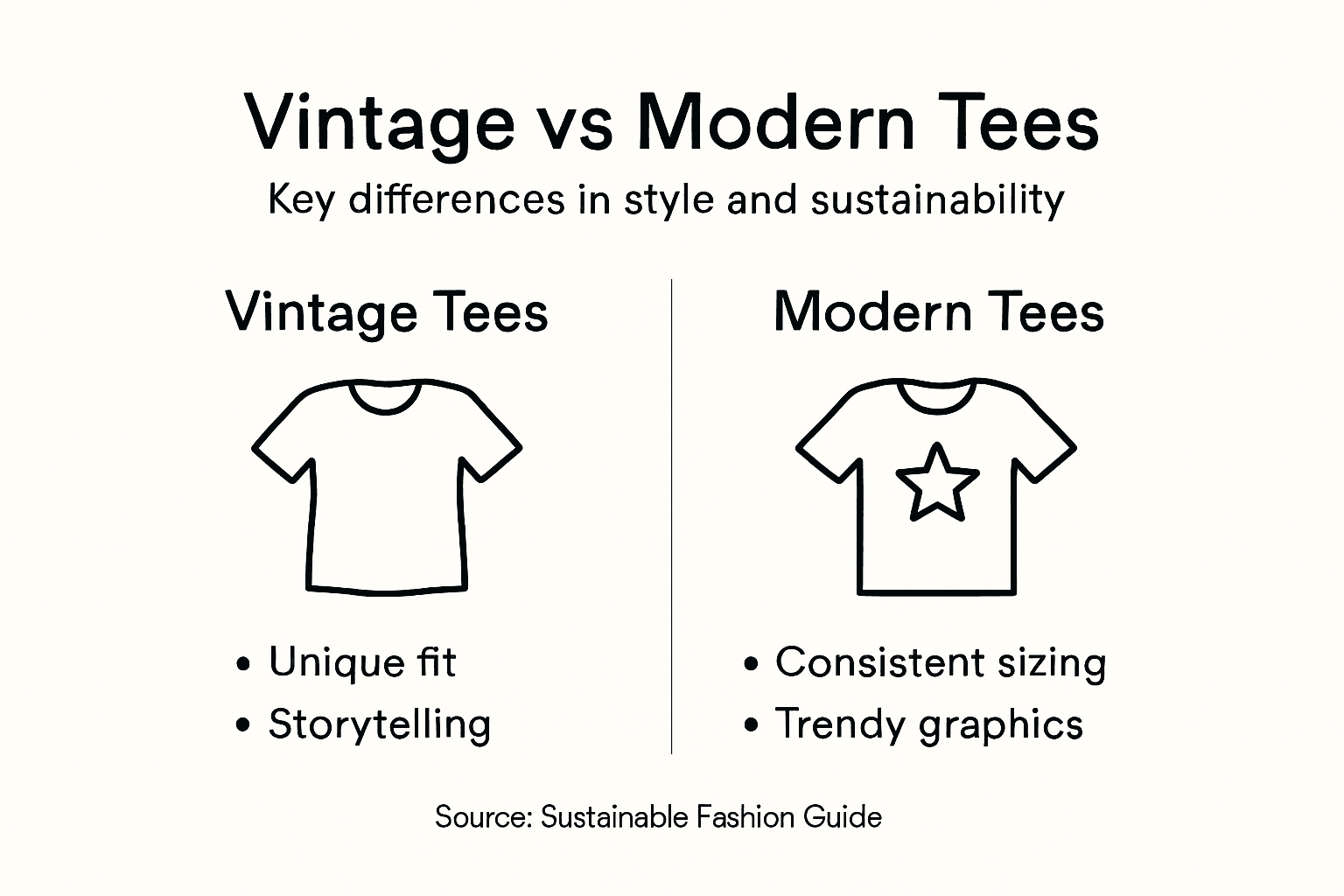
Modern graphic tees typically prioritize current trends, offering consistent manufacturing quality and immediate style relevance. They provide clean, crisp designs and are readily available through numerous retail channels. However, they often lack the nuanced storytelling and individual character that vintage tees inherently possess. Where modern tees represent momentary fashion statements, vintage tees embody living narratives - each thread and graphic carrying whispers of past cultural movements, musical revolutions, and personal histories.
The fundamental difference lies in authenticity and emotional resonance. Contemporary tees are manufactured with precision and uniformity, while vintage tees carry unique imperfections that tell complex stories. A vintage concert shirt isn’t just clothing - it’s a tangible memory, a piece of cultural heritage that connects the wearer to specific moments in time. Modern tees might capture current aesthetic trends, but vintage tees capture the essence of entire eras, making them infinitely more compelling for collectors, fashion enthusiasts, and cultural historians.
Here’s a summary of key differences between vintage and modern tees:
| Aspect | Vintage Tees | Modern Tees |
|---|---|---|
| Storytelling Value | Deep cultural and personal stories | Primarily current trends |
| Fabric and Fit | Unique cuts, soft worn fabrics | Standardized sizing and fabrics |
| Manufacturing | Outdated techniques, hand-finished details | Mass-produced precision |
| Emotional Resonance | Strong connections to history and nostalgia | Limited to design appeal |
| Investment Value | High, often appreciates with rarity | Low, typically depreciates |
Pro tip: When comparing vintage and modern tees, look beyond aesthetic appeal and consider the story, craftsmanship, and emotional connection each piece represents.
Discover Vintage-Inspired Style with a Modern Twist
The article highlights key challenges like finding authentic vintage tees that tell a story while supporting sustainability and personal expression. If you want clothing that goes beyond trends, capturing nostalgia, unique storytelling, and ethical sourcing, then you will appreciate what ChillStitch.com offers. Our collection blends humor, classic pop culture references, and retro vibes with ethically sourced fabrics. Every piece is designed to be a conversation starter and a form of self-expression that aligns perfectly with the ideas of authenticity and sustainability discussed in the article.
Experience clothes that talk back and wear your story with pride. Whether you seek a cheeky slogan hoodie or a vintage-inspired graphic tee that sparks connection, explore styles that celebrate identity and creativity while honoring the environment. Don’t settle for mass-produced garments when you can choose unique designs crafted to reflect what is running through your mind and deliver comfort with integrity.
Ready to elevate your wardrobe with pieces that combine vintage flair, sustainable values, and heartfelt expression? Visit ChillStitch.com today to find your perfect statement tee or hoodie. Say it loud and wear it proud with clothes that start conversations and build connections now.
Frequently Asked Questions
What defines a vintage tee?
Vintage tees are authentic garments typically dating from the 1920s to the 1980s, with some definitions now including pieces from the 1990s. They possess unique design aesthetics, fabric compositions, and cultural significance that set them apart from contemporary shirts.
Why are vintage tees considered sustainable fashion?
Vintage tees support sustainability by reducing textile waste and minimizing the resource-intensive processes of new clothing production. By extending the lifecycle of existing garments, they help in lowering carbon footprints and promote ethical fashion consumption.
How do vintage tees compare to modern graphic tees?
Vintage tees carry deep cultural and personal stories, often showcasing unique fits and fabric qualities that reflect specific eras. In contrast, modern graphic tees prioritize current trends and precision manufacturing but typically lack the emotional resonance and storytelling of vintage pieces.
What should I look for when evaluating a vintage tee?
When evaluating a vintage tee, examine the fabric tag, check for original manufacturing marks, and look for unique wear patterns. These factors help confirm the shirt’s age, authenticity, and unique story, enhancing its value and appeal.