

Wearing your favorite graphic tee can feel like stepping into a new identity. For young adults everywhere, clothing offers more than warmth or modesty—it becomes a way to shape how others see you and express cultural passions. Interdisciplinary research points to personal communication as a key role of clothing, transforming simple attire into meaningful statements. This article explores how words and vintage-inspired designs turn garments into reflections of humor, nostalgia, and individuality.
Table of Contents
- Words On Clothing: Definition And Meaning
- Types Of Messages And Slogans Used
- The Psychology Behind Wearing Words
- Impact On Identity And Social Groups
- Humor, Nostalgia, And Pop Culture Influence
- Risks, Missteps, And Social Implications
Key Takeaways
| Point | Details |
|---|---|
| Clothing as Communication | Clothing functions as a powerful medium for personal expression and social signaling, conveying complex identities and narratives. |
| Impact of Slogans | Effective slogans transform garments into impactful messages, resonating with wearers’ emotions and identities through creativity and clarity. |
| Psychology of Attire | Wearing specific clothing can influence thoughts, emotions, and social interactions, indicating the strong connection between clothing and personal identity. |
| Cultural Awareness | Understanding the nuances behind clothing choices is essential to prevent cultural appropriation and promote respectful representation through fashion. |
Words on Clothing: Definition and Meaning
Clothing transcends basic physical coverage, emerging as a powerful medium of personal communication and social expression. Interdisciplinary research perspectives reveal clothing as a complex system of symbolic interaction that goes far beyond mere fabric and thread.
At its core, clothing represents a unique human innovation with multifaceted functions. These functions extend well beyond protection and include:
- Identity signaling
- Cultural representation
- Social communication
- Emotional expression
- Personal storytelling
Understanding clothing requires recognizing its dual nature as both a practical necessity and a profound cultural artifact. Bodily covering isn’t just about shielding ourselves from environmental conditions, but about crafting narratives through fabric, design, and intentional visual communication.
Clothing’s role in human social structures demonstrates how garments serve as dynamic platforms for expressing individual and collective identities. Each piece of clothing becomes a canvas where personal stories, cultural heritage, and individual creativity intersect.
Pro tip: Choose clothing that genuinely reflects your inner narrative, understanding that every garment tells a story beyond its physical appearance.
Types of Messages and Slogans Used
Slogan messaging in clothing represents a sophisticated form of personal communication, transforming garments into dynamic platforms for expression. Linguistic research on brand slogans reveals multiple strategic approaches to crafting impactful messages across apparel.
The primary types of clothing slogans can be categorized into distinct communication styles:
- Business-oriented slogans: Focusing on brand positioning and professional image
- Descriptive slogans: Explaining product features or brand philosophy
- Persuasive slogans: Encouraging emotional connection or purchase motivation
- Creative slogans: Using humor, wordplay, or unexpected language
- Emotive slogans: Targeting deep emotional responses and personal identity
Slogan effectiveness depends on linguistic properties that balance creativity, clarity, and memorability. Shorter slogans tend to be more likable, while longer messages with unique word choices become more memorable.
The most successful clothing slogans create an immediate connection, transforming a simple piece of fabric into a statement of personal identity. They leverage powerful words like “style,” “comfort,” and “life” to resonate with consumers’ deeper aspirations and emotional landscapes.
Pro tip: Choose slogans that authentically reflect your personality and spark genuine conversations, understanding that the most powerful messages are those that feel genuinely personal.
Here’s a summary showing how different slogan styles impact the wearer and the audience:
| Slogan Style | Wearer Impact | Audience Reaction |
|---|---|---|
| Business-oriented | Boosts professionalism | Signals brand credibility |
| Descriptive | Clarifies intent | Enhances understanding |
| Persuasive | Inspires motivation | Evokes emotional response |
| Creative | Encourages individuality | Sparks amusement or interest |
| Emotive | Heightens connection | Evokes empathy or identification |
The Psychology Behind Wearing Words
Clothing psychology reveals how garments are far more than simple fabric coverings. Enclothed cognition theory demonstrates that what we wear profoundly impacts our thoughts, emotions, and behavioral patterns, transforming clothing into a powerful psychological tool.
The psychological mechanisms behind wearing words involve several key dimensions:
- Identity Expression: Communicating personal beliefs and values
- Emotional Regulation: Using clothing to manage and reflect mood
- Social Signaling: Creating connections through shared cultural references
- Confidence Enhancement: Leveraging symbolic meanings of attire
- Cognitive Priming: Influencing mental states through clothing choices
Psychological research on clothing choices indicates that attire serves as a dynamic psychological interface. Specific clothing selections can trigger immediate shifts in self-perception, social interactions, and emotional landscapes.
Words on clothing act as psychological anchors, providing wearers with a sense of agency, humor, and connection. They transform personal statements into wearable narratives, allowing individuals to communicate complex emotions and experiences through a simple piece of fabric.

Pro tip: Choose clothing messages that genuinely reflect your inner narrative, understanding that your attire is a powerful form of nonverbal communication.
Impact on Identity and Social Groups
Social identity emerges as a complex tapestry woven through clothing choices and communication. Social identity theory explores how garments function as powerful markers of group membership, allowing individuals to signal belonging while simultaneously expressing unique personal narratives.
Clothing serves multiple social identity functions:
- Cultural Representation: Signaling ethnic and cultural heritage
- Subcultural Affiliation: Demonstrating membership in specific social groups
- Professional Positioning: Communicating career and social status
- Political Expression: Displaying ideological commitments
- Personal Branding: Creating individual narrative through style
Fashion impacts social hierarchies by challenging or reinforcing existing social norms. Clothing becomes a dynamic language through which individuals negotiate their position within complex social ecosystems, communicating nuanced messages about personal identity and group associations.
Words on clothing amplify this communication, transforming fabric into a canvas of self-expression. They provide an immediate, visceral method of sharing personal beliefs, humor, and connections that transcend traditional verbal communication.
Pro tip: Choose clothing that authentically represents your identity, understanding that every garment tells a story about who you are and what you value.
Humor, Nostalgia, and Pop Culture Influence
Pop culture nostalgia transforms clothing into a vibrant canvas of emotional storytelling. Vintage revival explores how retro aesthetics become powerful vehicles for personal expression, allowing individuals to connect with cultural memories and shared experiences.
The key dimensions of nostalgic fashion influence include:
- Emotional Resonance: Triggering positive memories and feelings
- Cultural Authenticity: Celebrating historical moments and movements
- Generational Storytelling: Bridging past and present experiences
- Ironic Commentary: Using humor to reframe cultural narratives
- Personal Identity: Expressing individual connections to collective memories
Youth streetwear trends demonstrate how social media accelerates the adoption of nostalgic designs, creating rapid cultural conversations through clothing. These trends allow individuals to simultaneously celebrate and reimagine historical aesthetics with contemporary humor and insight.
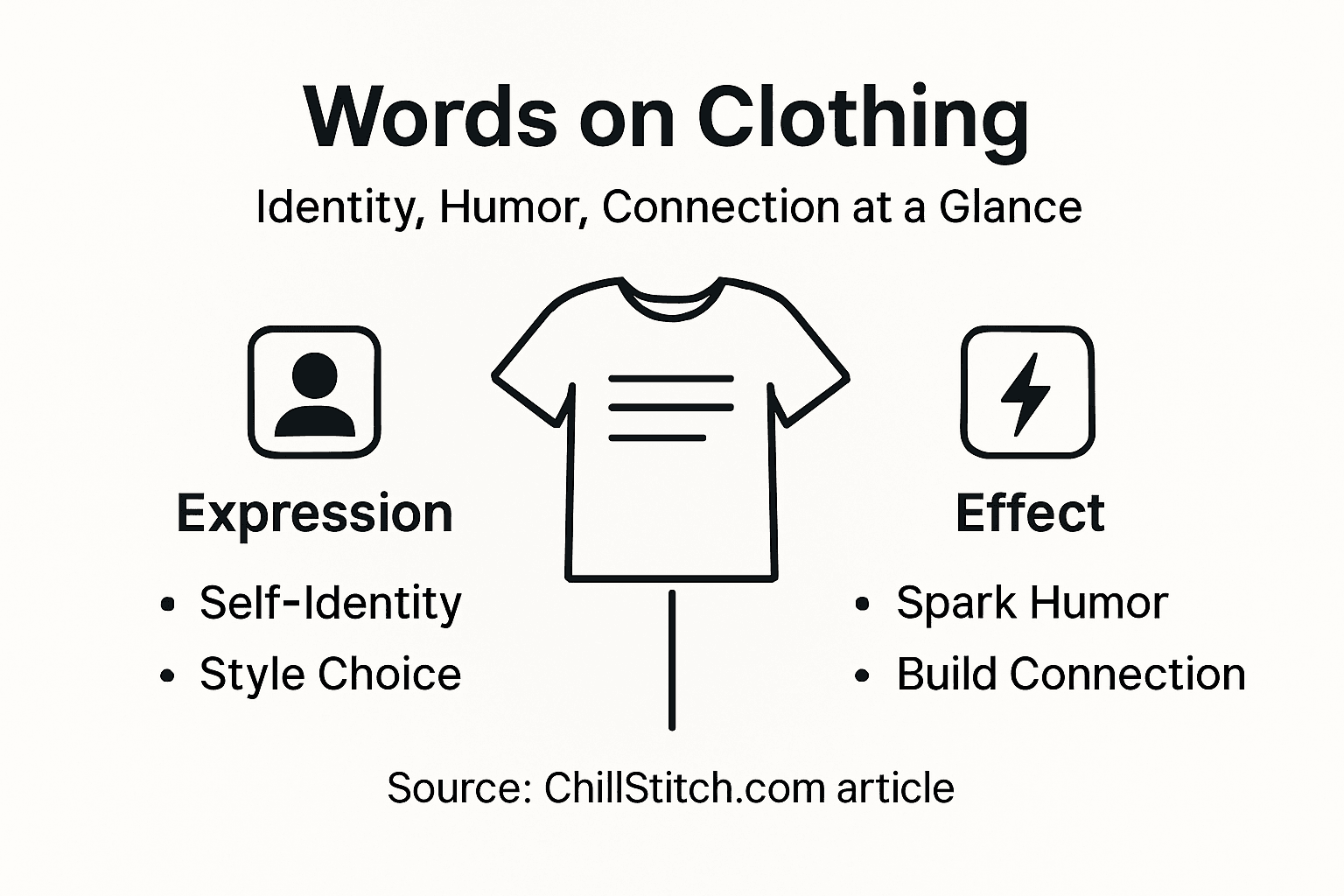
Words on clothing become powerful tools for navigating cultural memory, transforming simple garments into complex narratives that speak to shared experiences, generational humor, and collective identity. They invite viewers into intimate conversations about personal and cultural histories.
Pro tip: Choose clothing that sparks conversation and reflects your unique perspective on cultural memories and experiences.
Risks, Missteps, and Social Implications
Cultural communication through clothing demands nuanced understanding and responsible representation. Cultural appropriation risks reveal complex challenges in using words and designs that might inadvertently perpetuate harmful stereotypes or misrepresent cultural experiences.
Potential social risks in clothing messaging include:
- Stereotyping: Reducing complex identities to oversimplified representations
- Misappropriation: Using cultural symbols without understanding their significance
- Offensive Language: Unintentionally creating hurtful or discriminatory messages
- Context Misunderstanding: Failing to recognize historical or cultural nuances
- Unintended Interpretations: Messaging that can be misread or misunderstood
Ethical fashion perspectives emphasize the critical importance of conscious communication. Brands and individuals must carefully consider the potential social implications of their clothing choices, recognizing that every garment carries the potential to either bridge or divide social understanding.
Responsible clothing communication requires empathy, research, and a genuine commitment to understanding the deeper meanings behind words and symbols. It’s about creating connections that respect individual and collective experiences.
This table compares the positive and negative effects of clothing messages on social groups:
| Effect Type | Positive Example | Negative Example |
|---|---|---|
| Social cohesion | Instills a sense of belonging | Reinforces group stereotypes |
| Cultural bridge | Celebrates diverse heritage | Misrepresents traditions |
| Personal agency | Promotes individual expression | Causes unintentional offense |
| Conversation | Sparks thoughtful discussion | Triggers social misunderstanding |
Pro tip: Before wearing a message, pause and consider its potential impact from multiple perspectives, ensuring your clothing communicates with respect and awareness.
Make Your Clothing Speak Your Truth
The article reveals how words on clothing are more than decoration — they are powerful tools for identity expression, emotional connection, and social signaling. Many struggle to find apparel that truly reflects their unique personality without sacrificing comfort or authenticity. You deserve clothes that act as a genuine conversation starter and share your story with clarity and humor.
At ChillStitch.com, we understand that your clothing is your canvas for personal narrative and cultural connection. Our vintage-inspired tees, hoodies, and sweatshirts bring humor, nostalgia, and heart together in every stitch. We craft pieces made to spark conversations and let your true self shine while respecting the emotional and social layers every word on a garment carries.
Find clothes that talk back and wear your statement proudly. Explore our collection to experience clothing that combines style, comfort, and authentic expression all at once.
Ready to wear your identity with confidence? Discover your next favorite statement piece now at ChillStitch.com. Dive into our world where every garment tells a story and every slogan sparks connection. Start your journey to clothes that spark conversations today.
Frequently Asked Questions
What role do words on clothing play in identity expression?
Words on clothing serve as powerful tools for identity expression, allowing individuals to communicate their beliefs, values, and personal stories through their attire. They help convey a message about who the wearer is and what they stand for.
How can clothing messages evoke humor or nostalgia?
Clothing messages can evoke humor by employing clever wordplay or ironic commentary. Nostalgia appears through designs that reflect past trends or cultural moments, tapping into shared memories and experiences that resonate emotionally with the wearer and viewers.
What are the psychological effects of wearing clothing with words?
Wearing clothing that features words can influence thoughts, emotions, and social interactions. It may enhance confidence, evoke emotional regulation, and trigger cognitive priming, ultimately affecting how individuals perceive themselves and are perceived by others.
What should I consider to avoid cultural appropriation in clothing messages?
To avoid cultural appropriation, it’s essential to understand the cultural significance behind symbols and words. Research the historical context and cultural narratives associated with the attire to ensure respectful representation and prevent reinforcing stereotypes.
Recommended
- Everyday Wit Apparel: Humor and Identity in Fashion – ChillStitchApparel
- Role of Design in Self-Expression: Identity, Humor, and Connection – ChillStitchApparel
- Why Tees Spark Conversation and Build Connection – ChillStitchApparel
- Why Wear Slogan Tees: Expression, Humor, and Connection – ChillStitchApparel